Black Belt poverty and deprivation
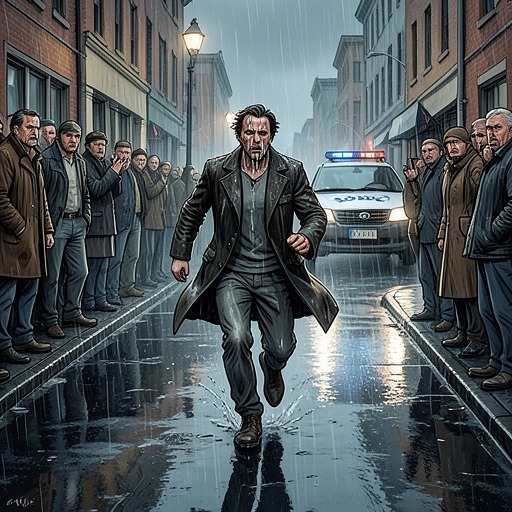
Native SonBlack Belt poverty and deprivation is not merely a backdrop to Bigger Thomas’s life in Native Son; it is part of a system that confines Black residents materially and socially. The novel links overcrowded, neglected housing and unequal rents to restrictions on residence, education, and work, then shows how the language of market rules and charity can obscure that structure. In Max’s account, deprivation is not an isolated misfortune but a condition made and sustained by the society around it.
Housing and Unequal Costs
At the inquest, Max challenges Mr. Dalton about the rent charged to the Thomas family and other Black families. He contrasts the amount paid by Black tenants with the price of comparable housing for white tenants. Mr. Dalton says he does not set rent scales and attributes prices to supply and demand; when asked who determines them, he again invokes the market. The exchange places the family’s hardship beside a seemingly impersonal economic explanation, without allowing that explanation to settle the question of responsibility.
Max makes the material circumstances specific: the Thomas family pays eight dollars a week for one unventilated, rat-infested room where four people eat and sleep. He sets this housing against Mr. Dalton’s millions in donations for Black education, asking why charitable giving accompanies such costly and inadequate accommodation. The contrast makes the central issue more than poverty alone: money given as benevolence does not undo the conditions under which tenants pay for unsafe, overcrowded housing.
The confrontation also exposes how profit and charity are presented as separate matters even when they involve the same landlord and tenants. Max asks whether profits taken from the Thomas family through rent are returned as charity, and Mr. Dalton rejects this as a distortion. The exchange leaves the moral conflict visible: donations may be praised as generosity, while the rent system that burdens Black tenants is defended as ordinary business.
Residential Confinement
The novel connects poor housing to racial control over space. Asked whether his company’s policy tends to keep Black residents in one area on the South Side, Mr. Dalton concedes that it works that way, though he says he did not originate the policy. His answer acknowledges the result while distancing him from its creation. Black residence is thus shown not simply as a matter of individual choice, but as a pattern produced through the operation of housing policy and real-estate practice.
Max’s broader account describes restrictions extending beyond housing: Black people are told where to live, how much schooling they may receive, where they may eat, and what work they may do. He argues that people are marked off and instructed to stay within assigned limits, even as the city presents its opportunities as widely available. This linkage makes deprivation cumulative. Restricted housing is one part of a larger narrowing of access to education, employment, and public life.
The courtroom itself reproduces the spatial division Max describes. He points to Black spectators sitting together behind a railing, not because anyone explicitly ordered them into those seats, but because they understand that white spectators do not want them on the same bench. The arrangement gives segregation a visible form inside the institution hearing Bigger Thomas’s case: exclusion can operate through understood rules and expectations as well as direct commands.
Poverty, Identity, and Social Power
In Max’s plea, material deprivation is joined to the limits placed on Bigger Thomas’s ambitions. He describes Bigger as poor, young, Black, and without education, with ambition but no clear outlet and little belief that opportunity is available to him. Bigger moves through crowded streets driving cars, serving tables, and operating elevators for others. These details set his labor in motion while showing how narrow the available routes to advancement appear within Max’s account.
Max argues that public images of happiness and success intensify this exclusion. Advertisements, radios, newspapers, and movies display abundance as though fulfillment were within everyone’s reach, but for those denied access, the same images become reminders of what is withheld. Poverty therefore involves more than low income or poor shelter: it also means living among visible promises of opportunity while being blocked from acting on them.
This argument does not erase Bigger’s responsibility for his crimes. Max explicitly says that his plea is not a claim that Bigger is simply an innocent victim of injustice. Instead, he asks the court to recognize the conditions in which Bigger’s life has taken shape and to understand how constrained existence can produce fear, hatred, and crime. The distinction is central to the novel’s treatment of poverty: structural explanation is not the same as denying individual action, but punishment alone cannot explain or remedy the structure.
The Courtroom and the Consequences of Deprivation
Max’s plea presents prison as a grim paradox. He argues that confinement could give Bigger a stable identity, a recognized relationship with the world, and association with other men on more equal terms—conditions absent from the freedom Bigger has known. The argument does not make prison a solution to Black poverty. Max immediately acknowledges that sparing Bigger would not help others or remove the marked-off neighborhoods in which he lived. The proposed mercy would, at most, recognize what the case reveals.
Bigger’s response to the inquest into Mary Dalton’s death further exposes how racial power shapes whose suffering receives attention. When Bessie’s body is brought forward, he understands that her death is being used as evidence against him in the case centered on Mary. He believes the white public will treat Bessie’s killing as a reason to demand his death, while showing little concern for her as a Black woman killed by another Black person. The proceedings make deprivation inseparable from unequal public recognition: even the dead can be absorbed into a legal narrative that serves a different purpose.
The social order described in the courtroom also extends to the city itself. Max evokes Chicago as a place of sharp contrasts—poverty beside luxury, Black and white communities, idealism beside cynicism—and argues that the city’s divisions are built into everyday life. Within that account, the poor are not outside the city’s economy; they live and work within it, but with sharply restricted access to its resources and protections.
Narrative Significance
Black Belt poverty and deprivation gives the novel’s conflicts a material and institutional setting. The Thomas family’s one-room housing, the higher rents challenged at the inquest, and the acknowledged tendency to keep Black residents concentrated on the South Side make racial inequality concrete. Max’s defense then widens the frame from one household to a system that limits residence, schooling, work, and public belonging.
The novel’s argument is that charity and individual goodwill cannot by themselves repair deprivation when the underlying arrangements remain intact. Mr. Dalton’s donations coexist with the rent burden and the housing policies under scrutiny; Max’s request for mercy likewise cannot dissolve the segregated neighborhoods he describes. The gap between benevolent language and material conditions is therefore not incidental. It is one of the means by which the book shows how poverty is reproduced, defended as ordinary, and made difficult for those living within it to escape.